
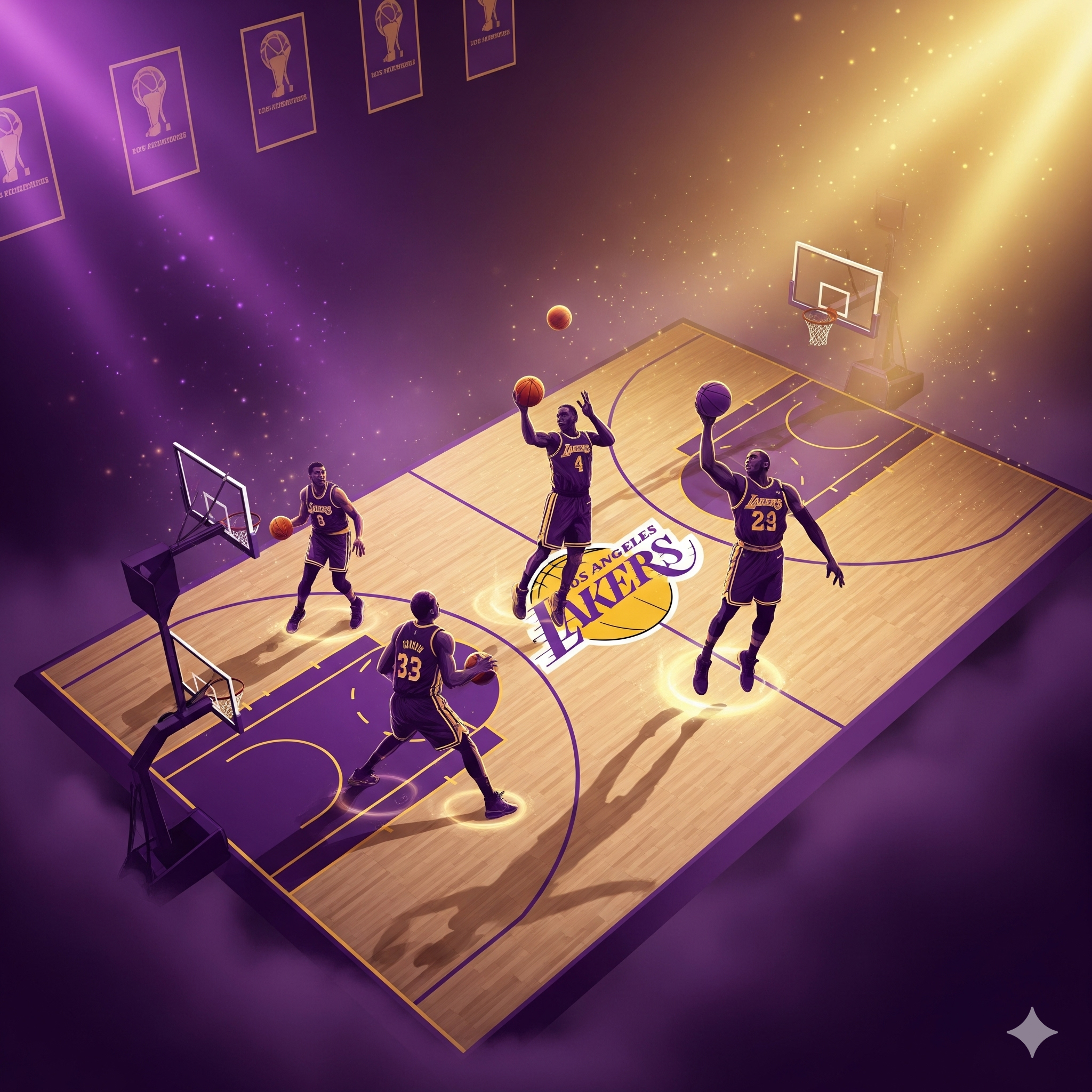
Hey there, basketball fans! If you’ve stumbled onto this little corner of the internet, you’re either bleeding purple and gold or curious about what makes the Los Angeles Lakers such a big deal. Trust me, I get it. I’ve been following this team for over two decades, and let me tell you – being a Lakers fan is like riding the world’s most expensive roller coaster. One day, you’re on top of the world, and the next, you’re wondering why your favorite player just airballed a free throw.
But here’s the thing about the Lakers: They’re not just a basketball team. They’re a cultural phenomenon, a piece of American sports history, and sometimes a beautiful disaster wrapped in designer uniforms. Today, I will take you on a journey through everything that makes this franchise special, frustrating, and absolutely unmissable.
The Lakers Dynasty: More Than Just Basketball
The Lakers conversation always comes up first when people talk about NBA dynasties. And for good reason, this team has more championships than I have bad hair days (and trust me, that’s saying something). With 17 NBA titles, they’re tied with the Boston Celtics for the most championships in league history.
But numbers don’t tell the whole story. The Lakers have this weird ability to attract superstars like a magnet attracts metal shavings. Magic Johnson, Kareem Abdul-Jabbar, Shaquille O’Neal, Kobe Bryant, and now LeBron James have some secret Hollywood magic that makes players want to play in Los Angeles.
I remember watching the Lakers as a kid in the early 2000s, and even then, there was something different about them. Maybe it was how they carried themselves on the court, or Jack Nicholson sitting courtside looking like he owned the place. Either way, they had this aura that other teams couldn’t match.
The Showtime Era: When Basketball Became Entertainment
Let’s be real, the Lakers basically invented the concept of basketball as entertainment. The Showtime era of the 1980s wasn’t just about winning games; it was about putting on a show. Magic Johnson ran those lightning-fast breaks, Kareem’s unstoppable skyhook, and the Forum rocked like a concert venue every single night.
This was when the Lakers became more than a team; they became a brand. Celebrities started showing up to games not just to be seen but because basketball was genuinely exciting to watch. The team played with flair and style, making even casual fans fall in love with the sport.
I wasn’t around for the original Showtime era (yeah, I’m probably younger than you think), but watching old footage still gives me goosebumps. The way Magic could thread a pass through three defenders or how the crowd would erupt when Kareem got the ball in the post, that’s the kind of basketball magic that creates lifelong fans.
The Kobe and Shaq Show: Greatest Duo or Greatest Drama?
Okay, let’s talk about the elephant in the room or should I say, the Black Mamba and the Big Diesel in the room? The Kobe Bryant and Shaquille O’Neal partnership was simultaneously the most dominant and dysfunctional duo in the NBA’s history.
From 2000 to 2002, these two were absolutely unstoppable. They won three straight championships, and they could have won more if they had just gotten along. Watching them play together was like watching a perfectly choreographed dance, except the dancers couldn’t stand each other.
Shaq was a massive force of nature who could literally break backboards (and did, multiple times). Kobe was a perfectionist assassin who approached every game like his life depended on it. Together, they were basketball poetry. Apart, they were a soap opera with more drama than a reality TV show.
I’ll never forget watching Game 7 of the 2000 Western Conference Finals against Portland. The Lakers were down by 15 points in the fourth quarter, and I was ready to turn off the TV and cry into my Lakers jersey. But then Kobe and Shaq just took over. It was like watching basketball magic happen in real time.
The Split That Broke Hearts
When Shaq left for Miami in 2004, it felt like watching your parents get divorced. You knew it was probably for the best, but it still hurt. The Lakers had to choose between their veteran superstar and their young franchise player and went with Kobe.
Looking back, it was probably the right choice. Kobe went on to win two more championships with the Lakers, while Shaq won one with Miami. But man, imagine if they had figured out how to make it work. We might be talking about the greatest dynasty in sports history instead of just one of the greatest.
LeBron’s Arrival: A New Chapter in Lakers History
When LeBron James signed with the Lakers in 2018, it felt surreal. Here was arguably the greatest player of his generation choosing to come to Los Angeles during what many thought was the twilight of his career. Some fans were skeptical whether he was just coming to Hollywood to make movies.
Those doubts were put to rest quickly. LeBron brought a championship to LA in 2020 (his first season that wasn’t interrupted by a global pandemic), and he’s continued to play at an elite level well into his late 30s. Watching him adapt his game to fit with different teammates has been fascinating.
The 2020 championship was special for so many reasons. It came during the COVID-19 pandemic, it was dedicated to Kobe Bryant’s memory, and proved that LeBron could win anywhere with any team. Plus, it ended the Lakers’ decade-long championship drought, which felt like an eternity for spoiled fans.
What Makes Lakers Fans Different
Being a Lakers fan is weird. We’re simultaneously the most loved and most hated fanbase in the NBA, and honestly, we’ve earned both reactions. We expect excellence because that’s what the franchise has always delivered. When the team is bad, we complain loudly. When they’re good, we act like it was inevitable.
But here’s what non-Lakers fans don’t understand: we’re not just bandwagon jumpers (okay, some of us are, but stay with me). Many of us have been through the bad times, too. We sat through the years after Shaq left when the team was mediocre. We watched Kobe’s final seasons when his body broke down, but his will wouldn’t quit. We endured the dark years between Kobe’s retirement and LeBron’s arrival.
The Celebrity Factor
Let’s address the obvious: Lakers games are as much about celebrity spotting as basketball. Jack Nicholson has been a fixture for decades, but you’ll also see everyone from Leonardo DiCaprio to Rihanna courtside on any night.
Some people think this diminishes the “purity” of the sport, but I disagree. The celebrity presence is part of what makes Lakers games special. It’s not just about the famous faces; it’s about the energy they bring. When the crowd includes people who could afford to be anywhere else in the world but choose to watch basketball, it says something about the product on the court.
The Business of Being the Lakers
From a business perspective, the Lakers are absolutely fascinating. They’re consistently one of the most valuable franchises in the NBA, and their brand recognition extends far beyond basketball. The purple and gold jerseys are instantly recognizable around the world.
What I find interesting is how the organization balances maintaining its championship culture with the realities of modern NBA economics. The Lakers are not afraid to spend money on talent, but they also have to navigate salary caps and luxury taxes like everyone else. The difference is that when you’re the Lakers, star players actually want to come play for you.
The Trade Rumors and Drama
If you follow the Lakers, you know that trade deadline season is like Christmas morning; you never know what you’ll get, but it will probably be exciting. The Lakers are involved in almost every major trade rumor, whether they’re interested in the player or not.
This constant speculation is both exciting and exhausting. On one hand, it’s fun to imagine your team landing the next superstar. On the other hand, it means every role player on your roster is constantly being discussed as trade bait. It’s hard to get attached to players when they might be gone next week.
The Crypto.com Arena Experience
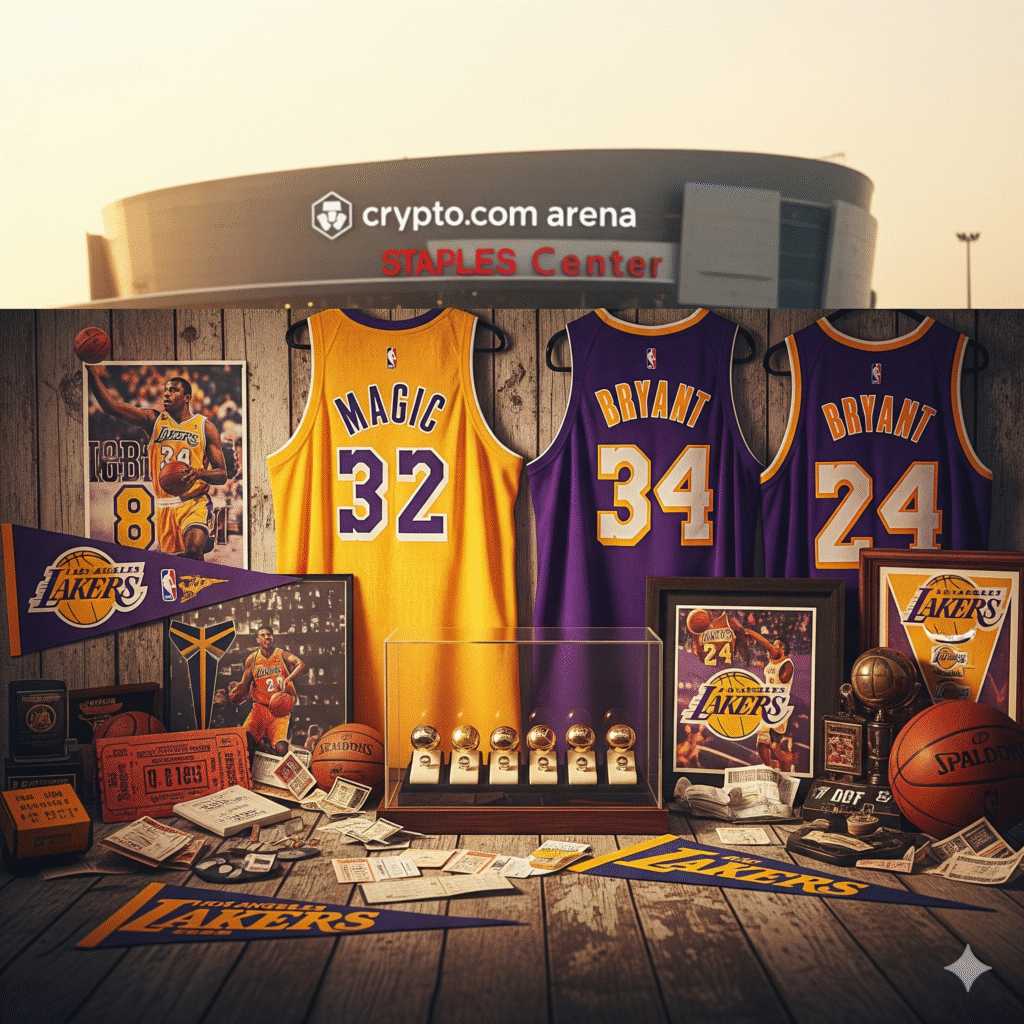
Going to a Lakers game at Crypto.com Arena (still getting used to that name after calling it Staples Center for so long) is unlike any other NBA experience. From the moment you walk in, you can feel the history. The championship banners hanging from the rafters tell the story of decades of excellence.
But it’s not just about the history, it’s about the atmosphere. Lakers fans are passionate, knowledgeable, and loud when they need to be. Sure, some courtside seats are filled with people more interested in being seen than watching basketball, but the real fans scattered throughout the arena create an energy that’s hard to match.
Game Day Rituals and Superstitions
Every Lakers fan has their game day rituals. Mine involves wearing the same lucky shirt (a vintage Magic Johnson jersey that’s probably falling apart), eating way too much pizza, and texting my dad throughout the game with running commentary that he probably doesn’t want to receive.
Some fans are more elaborate. I know people who won’t sit in certain chairs during close games, insist on ordering the same food from the same restaurant, or have complex pre-game routines that would make Olympic athletes jealous. It’s silly, but part of what makes being a fan fun.
The Future of the Purple and Gold
Looking ahead, the Lakers are in an interesting position. LeBron is still playing at an elite level, but he’s not getting any younger. Anthony Davis is a superstar when healthy, but staying healthy has been challenging. The supporting cast changes frequently, which makes it hard to build chemistry.
But if there’s one thing I’ve learned from following this team, you can never count out the Lakers. They can attract talent and make magic happen when you least expect it. Will they win another championship soon? I have no idea. Will it be entertaining to watch them try? Absolutely.
Young Talent and Development
One area where the Lakers have struggled recently is developing young talent. They’ve historically been more focused on trading for established stars than building through the draft. This approach has worked well for them, but it means they don’t always have a strong pipeline of young players developing in their system.
That said, they’ve had some success with players like Austin Reaves and others who have exceeded expectations. Finding and developing these “diamonds in the rough” players is crucial for any championship team, especially when paying max contracts to your superstars.
The Rivalries That Define Lakers Basketball
You can’t talk about the Lakers without talking about their rivalries. The Celtics rivalry is the most famous, dating back to the Magic-Bird era and continuing through various iterations over the decades. These two franchises have met in the Finals 12 times, and every matchup has been appointment television.
But the Lakers have had other great rivalries, too. The battles with the San Antonio Spurs in the 2000s were epic. The recent playoff series against the Denver Nuggets has been competitive and entertaining. Rivalries make regular-season games feel like playoff games, and the Lakers seem to bring out the best (or worst) in their opponents.
The Clippers: Crosstown Drama
Living in Los Angeles means dealing with the awkward dynamic of having two NBA teams in the same city. The Clippers have been competitive recently, which has made things interesting. For decades, Lakers fans barely acknowledged the Clippers’ existence. Now, there’s actually a legitimate crosstown rivalry brewing.
The “Battle of LA” games have become must-watch television, especially when both teams are good. It adds another layer of drama to an already dramatic franchise, which is very on-brand for the Lakers.
Lessons from Lakers History
If you study the Lakers’ history, you’ll notice some patterns. This franchise succeeds when it has strong leadership (both on the court and in the front office), is willing to make bold moves, and creates a culture that attracts elite talent.
They’ve also shown that championship windows can close quickly but can also open unexpectedly. The key is being ready to take advantage of opportunities when they arise. Sometimes, that means trading away popular players, taking chances on aging superstars, and being patient when things aren’t going your way.
What Other Franchises Can Learn
Other NBA teams study the Lakers because they’ve figured out how to maintain relevance even during down periods. They understand that being in Los Angeles helps, but location alone doesn’t guarantee success. It’s about creating an organization that players want to join and fans want to support.
The Lakers also understand the importance of marketing and branding. They’ve created a global brand that extends far beyond basketball, which gives them advantages in recruiting players and generating revenue.
Why the Lakers Matter Beyond Basketball
This sounds corny, but the Lakers indeed represent something bigger than basketball. They’re part of the American dream narrative, the idea that you can achieve greatness if you work hard enough and dream big enough.
Every kid who picks up a basketball has probably imagined hitting the game-winning shot in a Lakers uniform. The franchise has produced some of the most iconic moments in sports history, moments that transcend basketball and become part of our cultural memory.
The Lakers also uniquely represent Los Angeles. They embody the city’s combination of glamour, ambition, and diversity. When the team succeeds, the city feels it. When they struggle, it’s front-page news in the sports section.
FAQs About the Los Angeles Lakers
Q: How many championships have the Lakers won? A: The Lakers have won 17 NBA championships, tied with the Boston Celtics for the most in NBA history. Their most recent championship came in 2020.
Q: Who are the greatest Lakers players of all time? A: The Mount Rushmore of Lakers greats typically includes Magic Johnson, Kareem Abdul-Jabbar, Kobe Bryant, Shaquille O’Neal, or LeBron James, depending on who you ask.
Q: Why are the Lakers called the Lakers? A: The team was founded in 1947 in Minneapolis, a city known for its many lakes. When the franchise moved to Los Angeles in 1960, it kept the name despite LA not being particularly known for lakes.
Q: What is Showtime basketball? A: Showtime refers to the Lakers’ fast-paced, entertaining style of play during the 1980s, led by Magic Johnson. It emphasized fast breaks, no-look passes, and putting on a show for fans.
Q: How much are Lakers season tickets? A: Lakers season tickets vary widely depending on location, ranging from a few thousand dollars for upper-level seats to six figures for premium courtside locations.
Q: Who owns the Lakers? A: The Lakers are owned by the Buss family trust, with Jeanie Buss serving as the controlling owner and president of the franchise.
Q: What’s the Lakers’ biggest rivalry? A: Historically, the Lakers’ biggest rivalry has been with the Boston Celtics, though they also have significant rivalries with teams like the San Antonio Spurs and their crosstown neighbors, the LA Clippers.
The Final Buzzer
Whether you’re a die-hard fan like me or someone trying to understand the fuss, the Lakers represent something special in professional sports. They’re proof that excellence is possible, that dynasties can be built, and that sometimes, just sometimes, Hollywood endings happen in real life.
So the next time you watch the Lakers play, remember you’re not just watching a basketball game. You’re witnessing the continuation of a story that started decades ago and will continue long after current players retire. You’re part of a tradition that connects generations of fans who share one thing: we all believe in the magic of purple and gold.
And if they happen to lose that night? Well, there’s always the next game. That’s the beauty and the curse of being a Lakers fan: hope springs eternal, even when logic suggests otherwise. But honestly, would we have it any other way? Keep bleeding purple and gold, Lakers fans. The best is always yet to come.
